JAPAN - STREET NINJA
1st time doing Street Photography in Japan

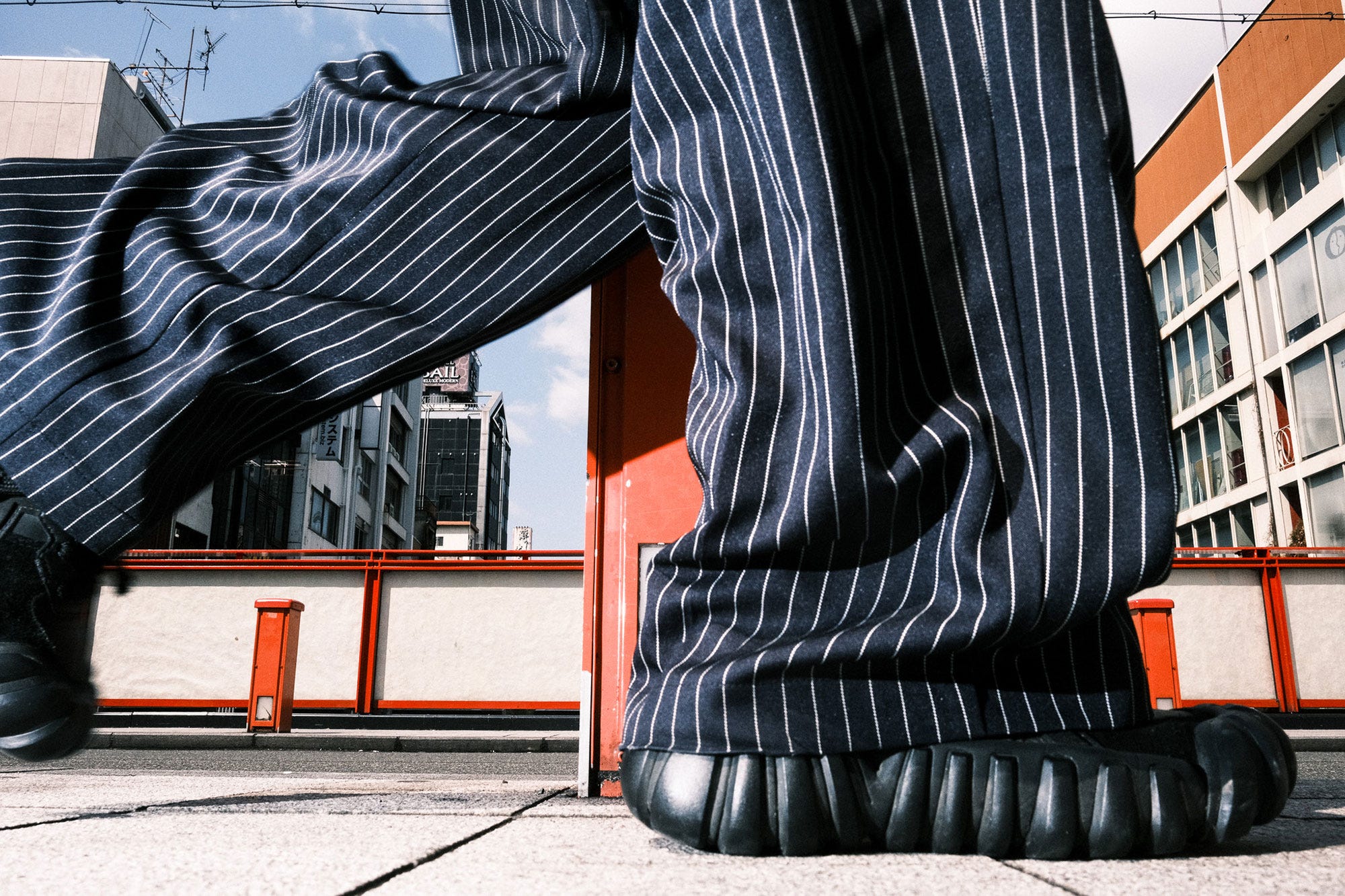
This low angle image is taken with my Fuji x100v and an off camera flash on a bridge in Osaka using zone focusing and all manual settings. 28mm lens converter.
Ninja definition - Stealth and Infiltration: Ninjas were trained in stealth techniques to move undetected in various environments. This involved methods of silent movement, camouflage, and disguise.
I recently accessed my street ninja skills as a street photographer in Japan April 2026.
I wanted to be unnoticed, invisible and be able to take quiet candid shots as my family and I moved our way through Osaka, Kanazawa, Takayama, Mt Fuji and Tokyo.
I packed my bag with three cameras for this trip. A Ricoh GR3x, GR2 and a Fuji x100v.
Whenever I go overseas to shoot, I feel some pressure to produce a certain standard of images. I do this so I can make the most of my time and be the best version of myself in this new environment. I basically shoot as if I am on a paid assignment but actually, I am not being paid and I am doing it all for the love of street photography.
I began this trip with the intention of producing a zine from the images I make even though I am travelling with my family and children. Seems like an impossible task?
It is very challenging and difficult but not impossible. With the right intention and work ethic anything is possible. I ended up having enough images to create two zines, one in Black and White and the other in colour. The weather dictated the result.
In Osaka the weather was mostly sunny and then cloudy but on the sunny days I managed to get to some nice locations and create some images. During April the weather is an even mix of sunny and cloudy so If you want more consistent light I would plan to go in Nov/Dec. April has inconsistent weather, but the cherry blossoms are magnificent and well worth experiencing.
For the image above I set myself up on the ground and people just started walking past me. People in Japan are very private, and they don’t interact with you on the street. This makes it the perfect place to hone your street photography skills as there is little or no issues photographing the public with or without flash. It is like India in that way but the streets are incredibly clean.
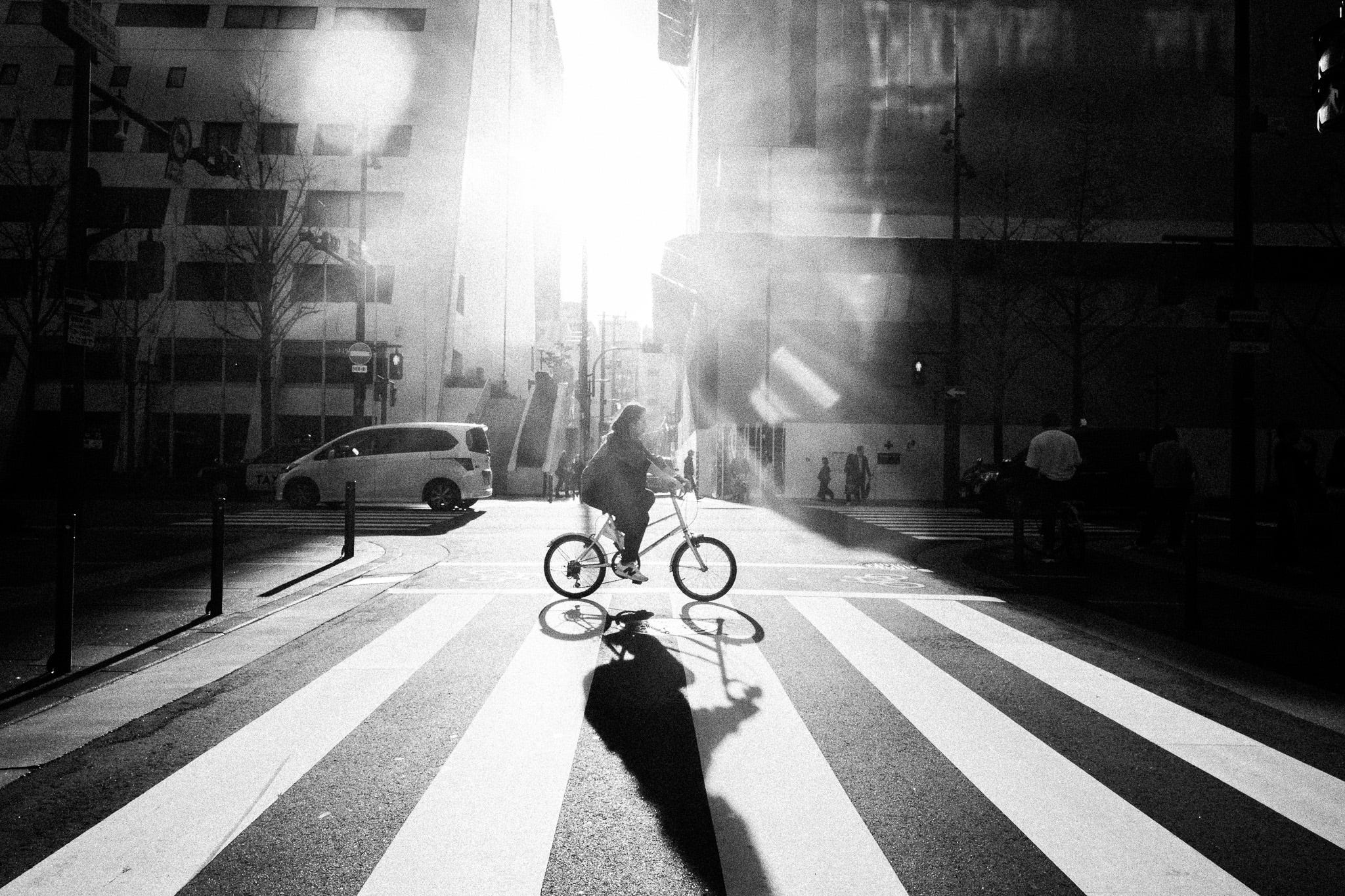
There are streets in Osaka where the sun shines straight down the middle of the road so you can produce engaging dramatic images with long shadows. Fuji x100v zone focusing 28mm lens converter.
I started shooting in the early mornings before my family got up. I wandered around the streets close to the hotel. The light in Japan is much more nuanced and subtle than it is here in Australia. The shadows in Japan have their own way of dancing on the walls. They have a delicate quality to them, and I loved looking at them everywhere.
When we arrived in Kyoto, I was mesmerized by the clean crisp street zebra crossings everywhere. I started hanging around the closest crossing to our hotel and started observing the locals. I realized the orderly design of the zebra crossings say so much about the people and the way they live. The Japanese people are organized, respectful and clean. The live life in an almost black and white clarity. They respect the surroundings and people around them and this is all staring right back at me in the form of a zebra crossing.
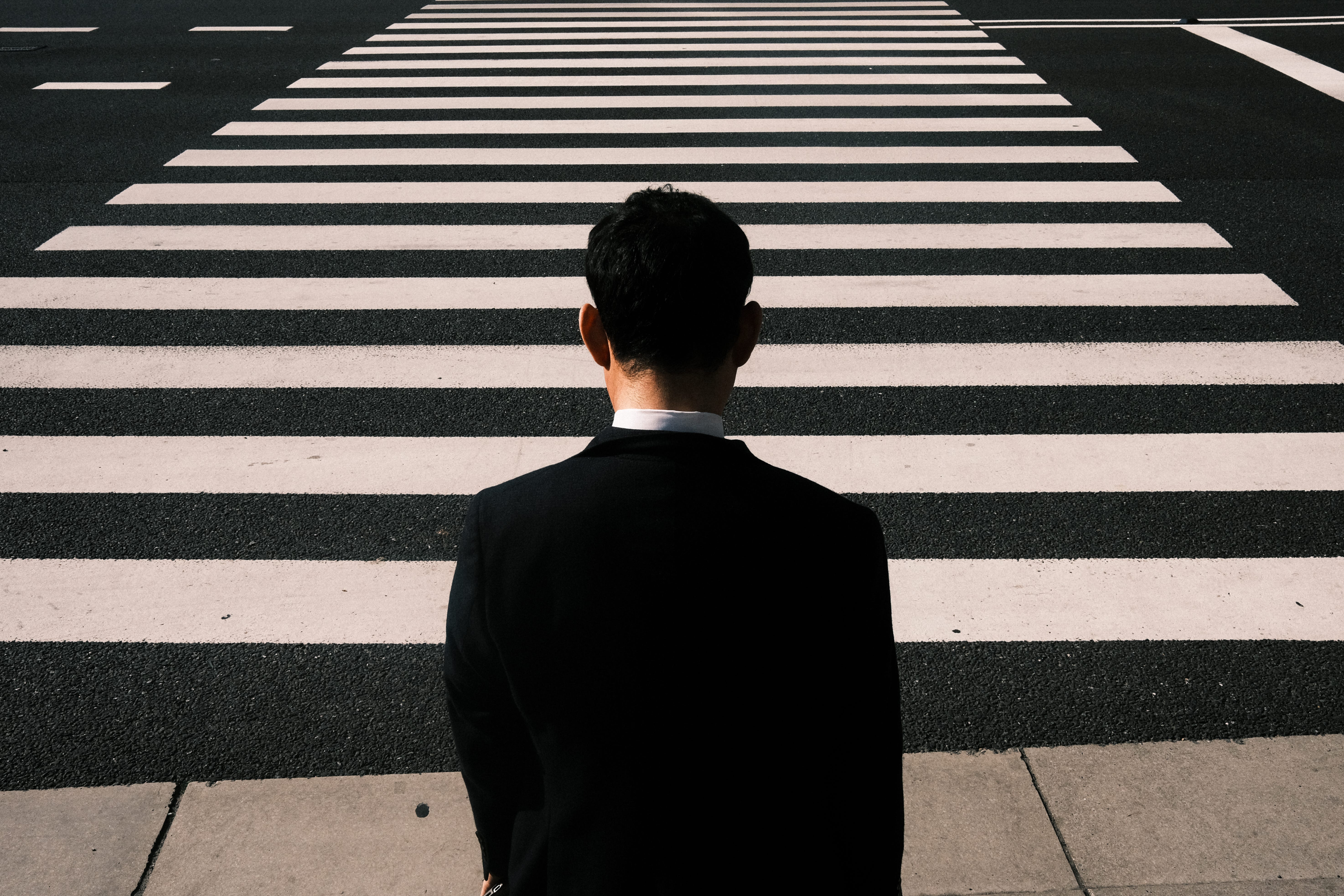
Kyoto crossing early morning. Fuji x100v 28mm lens converter.
People have such an ingrained respect for rules and a sense of honour that they won’t cross the road unless the green man is flashing, even if the street is completely empty. In Japan, behaving properly in public is tied to personal dignity. Crossing on red would feel like letting yourself down, not just breaking a rule. These behaviours often reflect a broader cultural pattern: respect for rules, trust in institutions, and a belief that individual actions contribute to the wellbeing of the group.
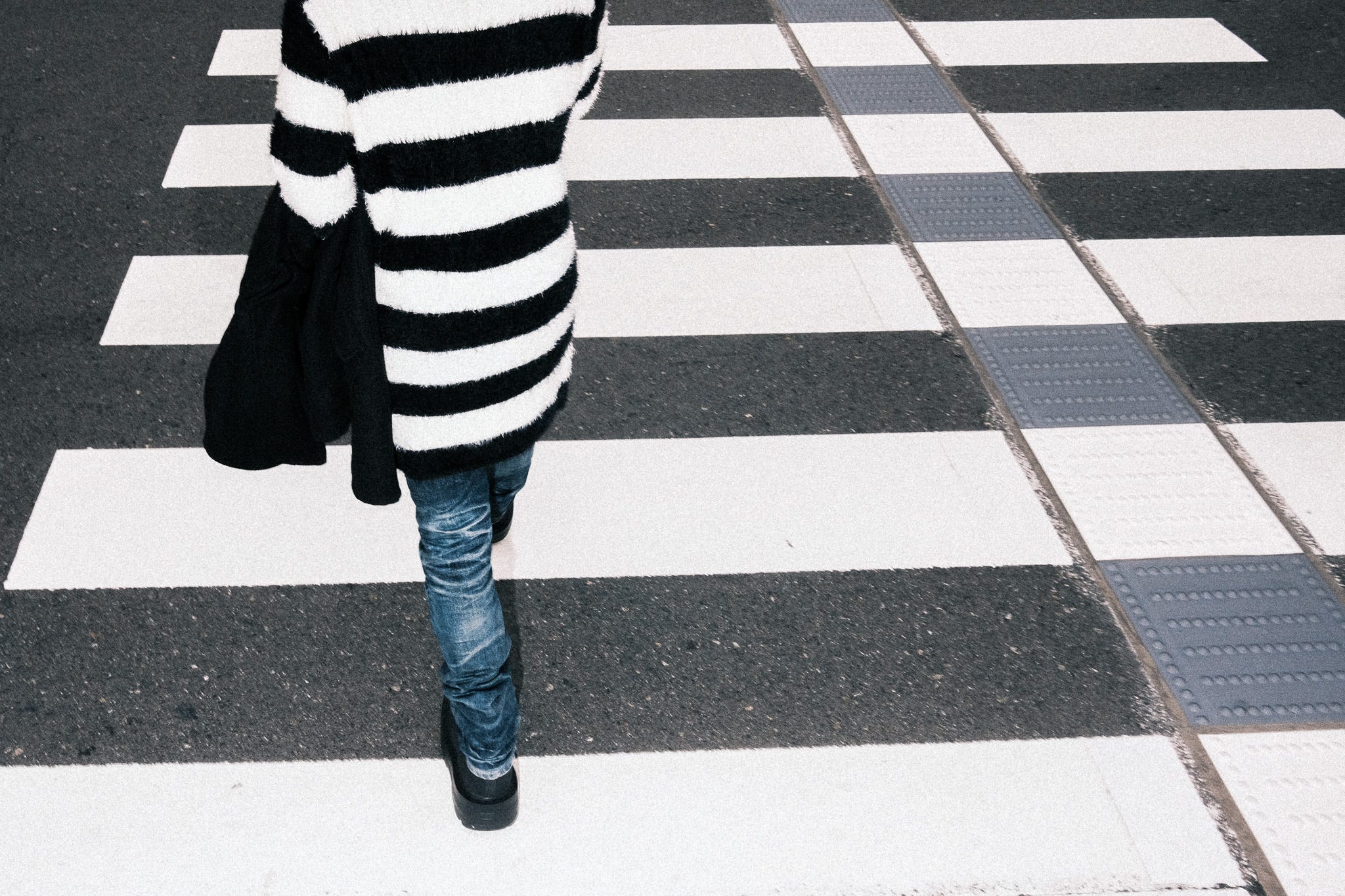
Early morning in Osaka I noticed a woman wearing a striped jumper and followed her across the zebra crossing using an off-camera flash because the day was very cloudy.
Whenever the sun was out in the mornings or afternoons I started a new shooting style. I would walk across the zebra crossing and when the sun was low enough to illuminate the driver, I would stop right Infront of the car and take a shot of the driver head on!
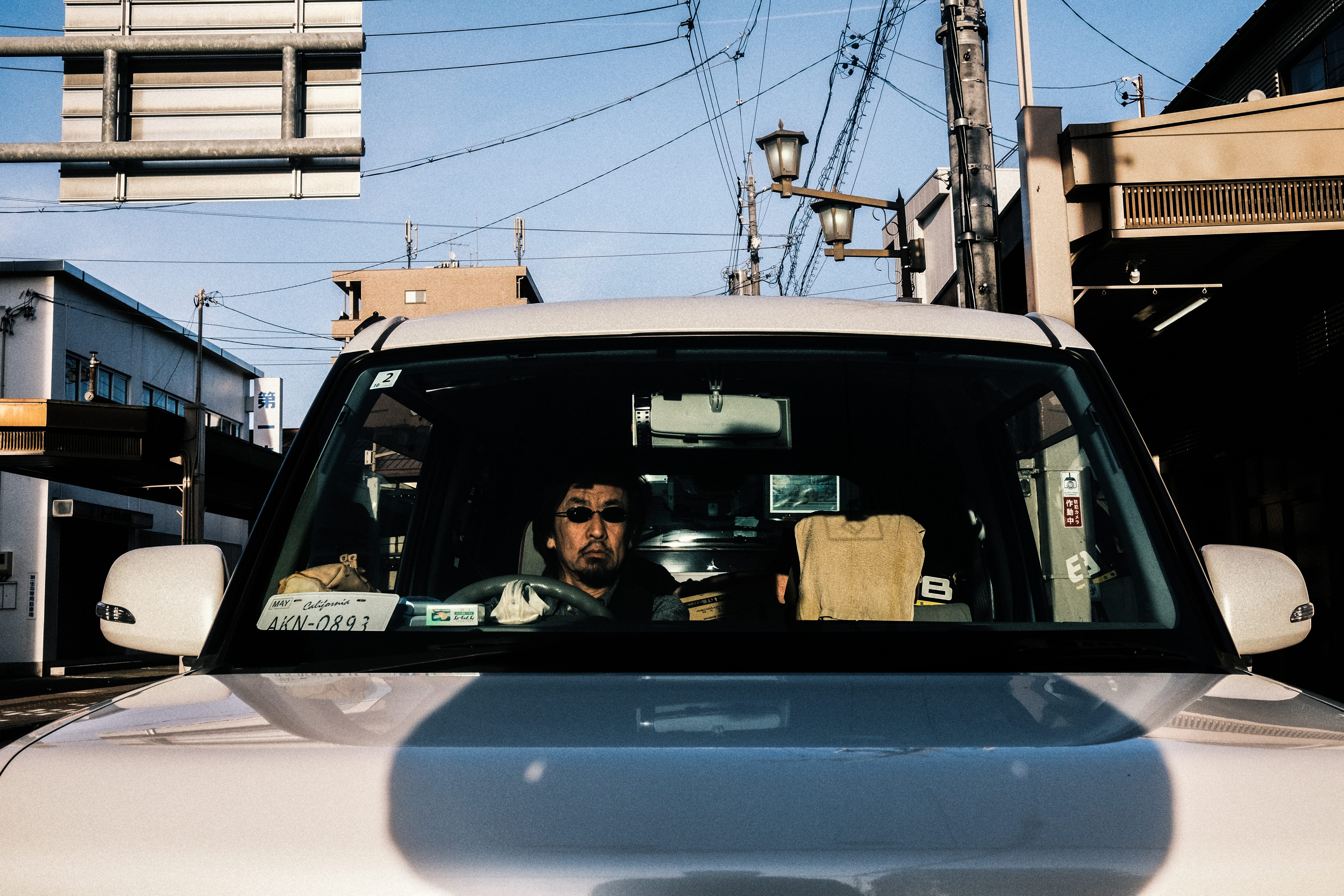
First, I would stake out crossings to make sure the background elements created a balanced and interesting composition. Each city offered different and interesting backgrounds to help make the image more aesthetic.
A crossing in Kyoto, Fuji x100v 35mm. Manual focus.
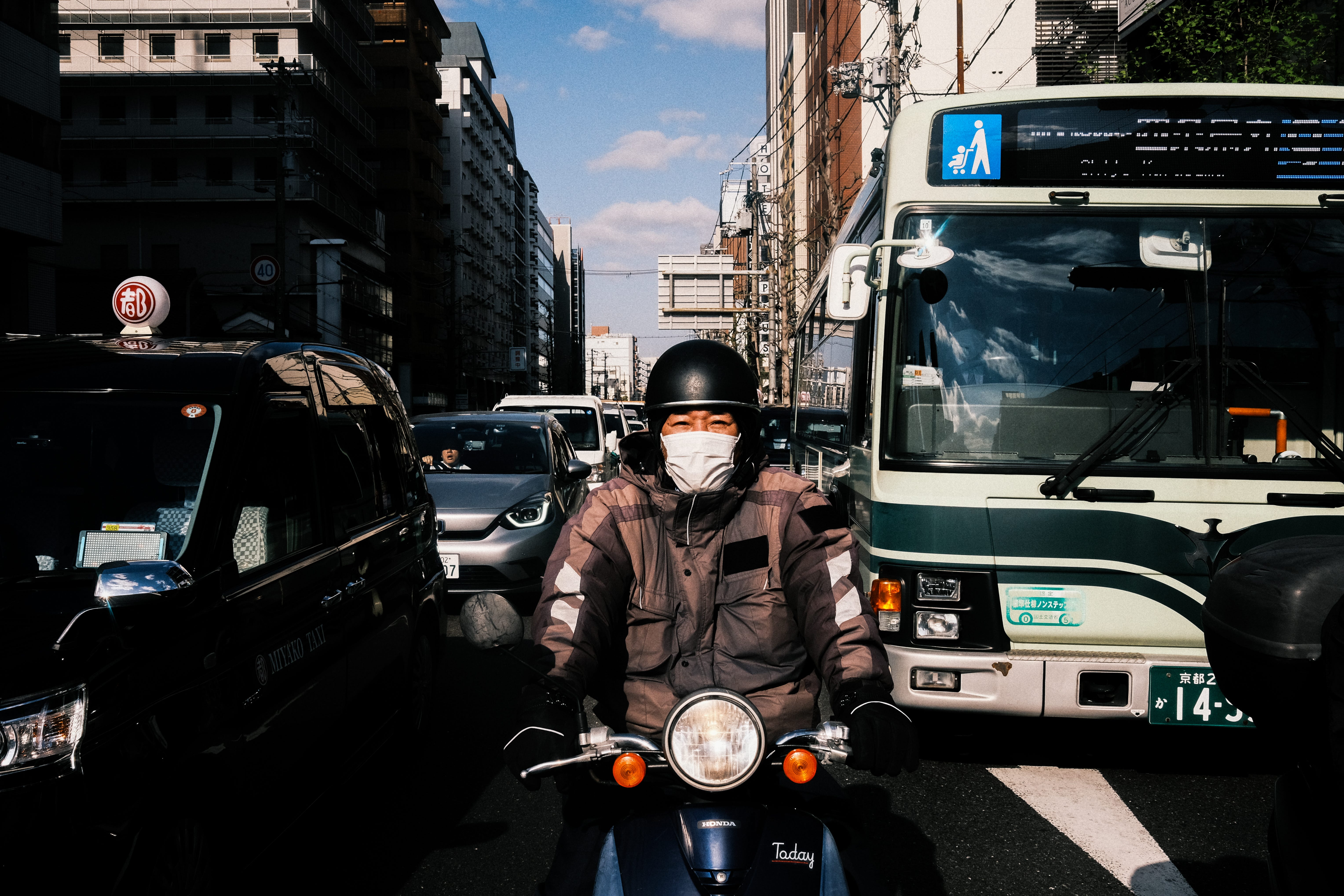
A road crossing near our hotel in Kyoto. Fuji x100v 35mm.
This style of shooting takes courage especially in Japan because it seems to break all the rules of social normality. The way I diffused the awkward situation was by pointing above the car to let them know that they were not the focus. In fact they were the main subject, and all I had to do was point the camera and shoot then keep walking. The good thing about this kind of shoot is that no one can stop and get out as they are driving in a street with traffic behind them.
In Tokyo the weather was quite grey, so it forced me to shoot as I call it -
“Full Moriyama style” or a mix of Tatsuo Suzuki and Moriyama. Morizuki style?
Suzuki's work has been described as spontaneous, eccentric, and raw.
Daido Moriyama tends to capture images without looking through the viewfinder, so as to separate himself from the detached, scientific, and deliberate cropping produced by the viewfinder lens. He often takes a large volume of photographs of the world as it passes by him, embracing the uncertainty and indeterminacy of encountering the scenes as they reveal themselves during the development process.
I used my Ricoh GR2 which is an 11-year-old camera that cost me $500AUD.
It’s never about the gear - it’s your perception of the world.
I didn’t look at the screen. I shot with my off-camera flash as I moved through the city space without looking. This is a liberating process and tons of fun. In the day you can use flash and no one notices. The results are dramatic and surreal. When in Japan you can feel the legacy of the greats like Moriyama and Suzuki and you feel compelled to shoot in this gritty style.
It’s hard to explain but when you are there the street speaks to you in this dramatic way with noir sensibilities. Somehow - it just works.
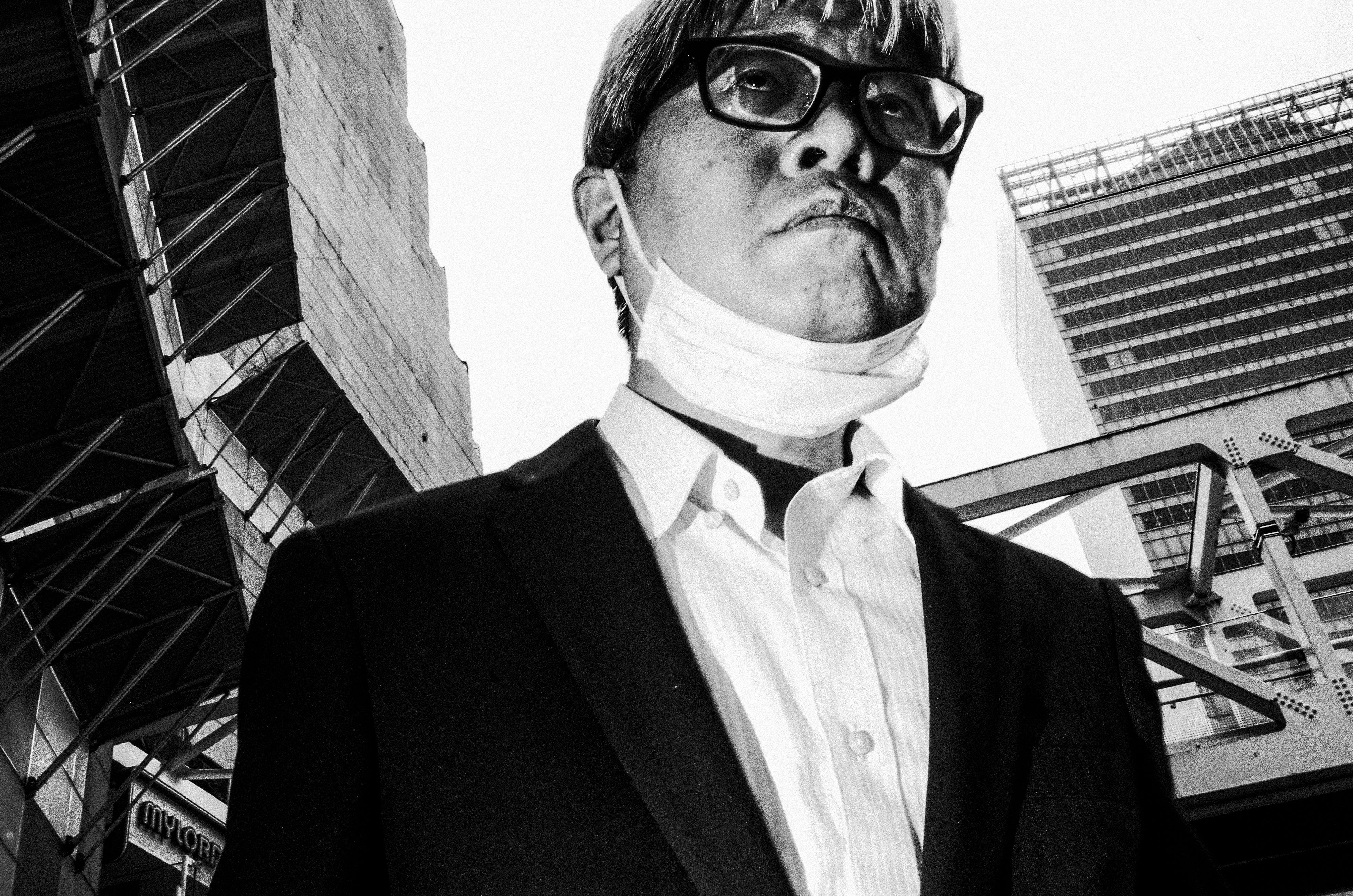
Shinjuku Station on a grey day using flash and a Ricoh GR2.
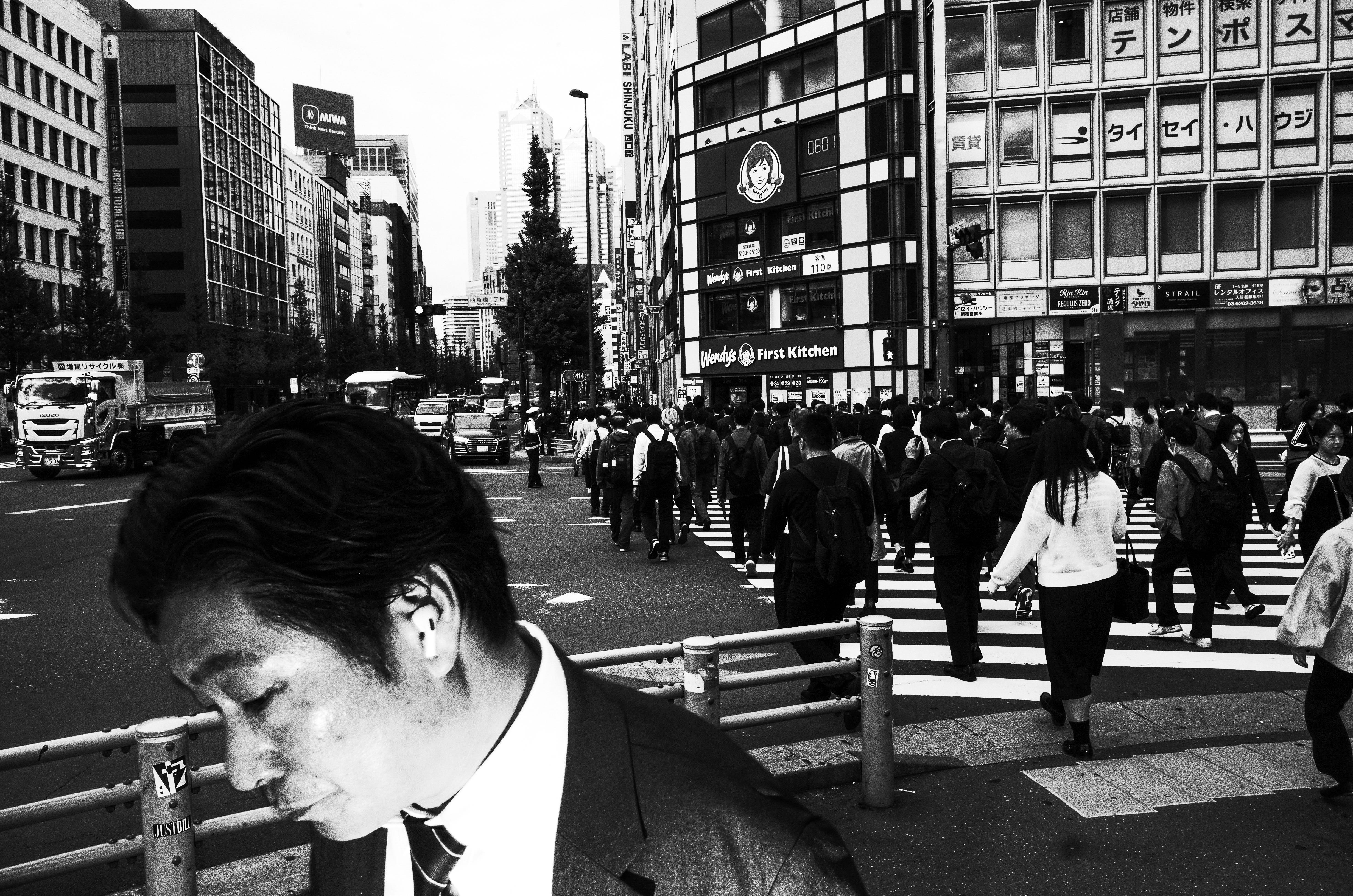
Shinjuku crossing near the Train station. Ricoh Gr2 with flash.
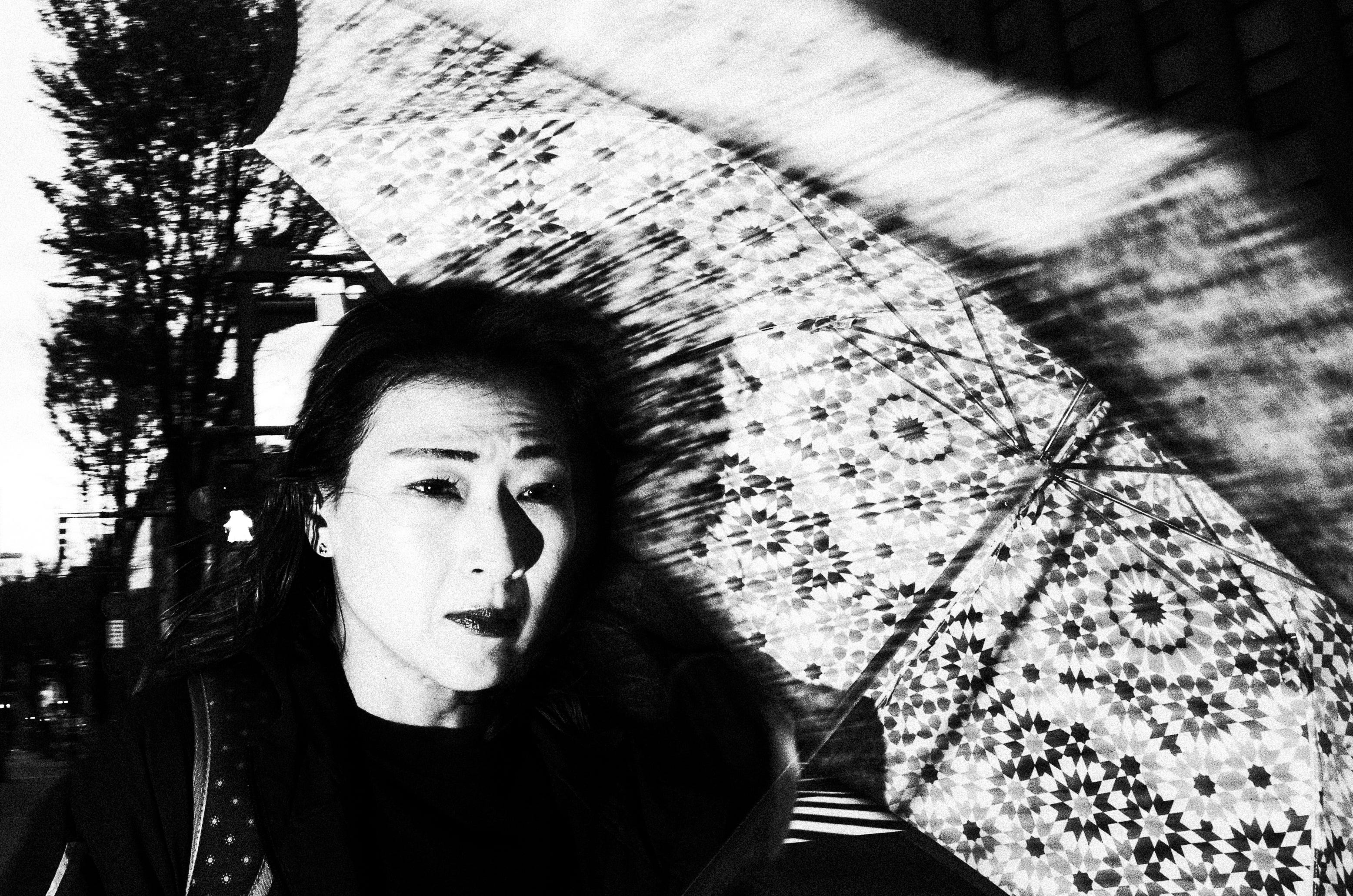
Kyoto near the fish markets. Ricoh GR2 with flash slower shutter speed.
The Ricoh GR2 has a profile called high contrast Black and White and it has a quality all of its own that can’t be reproduced in post.
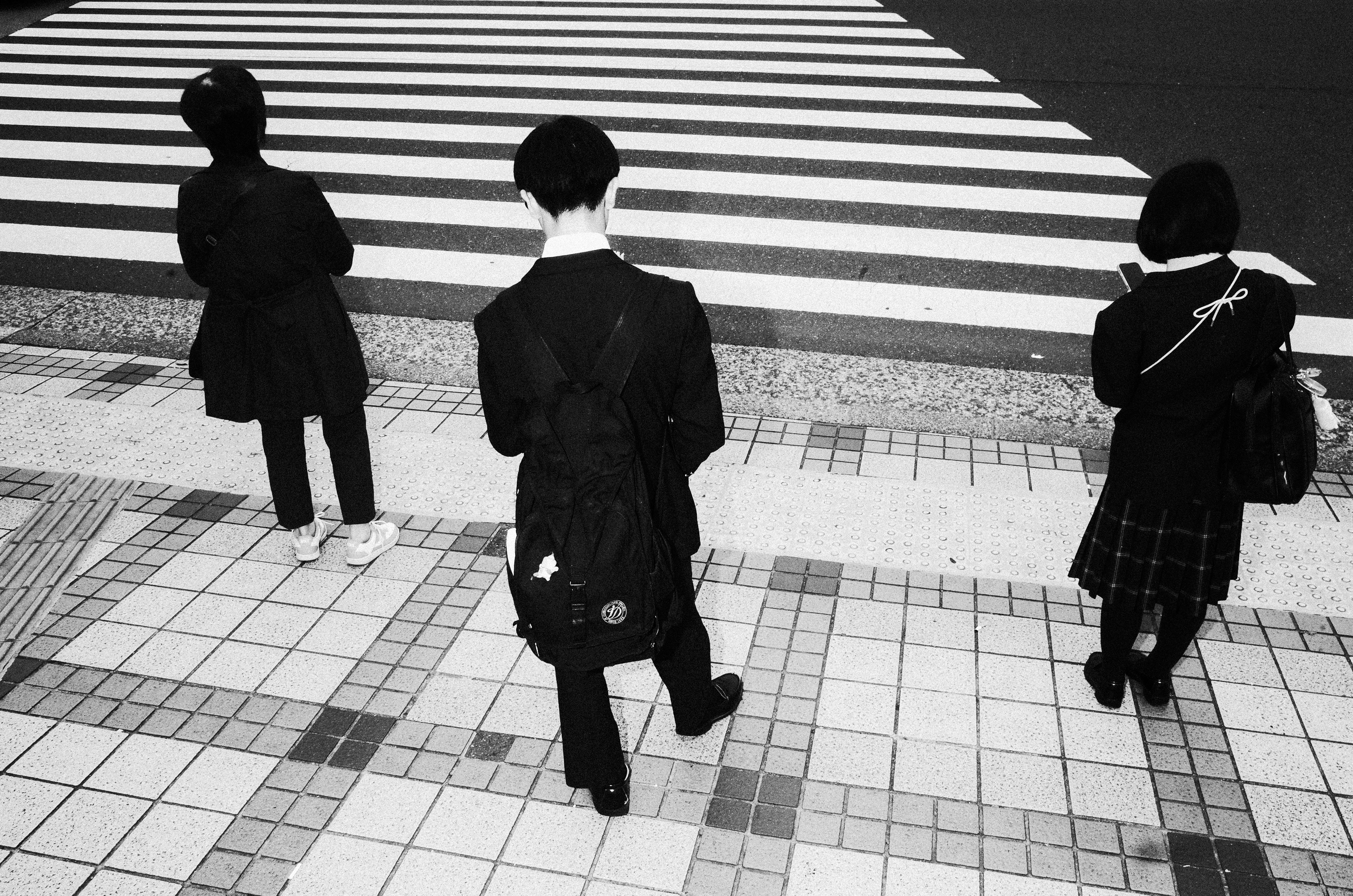
Street Crossing Tokyo. Ricoh GR2 with Flash.
When we got to Mount Fuji it was sunny so the X100v came out for breakfast at the hotel. We were not near the lake, so I used the tabletops to reflect the mountain as the guests drank coffee and ate breakfast. Yes! I photographed Mount Fuji with a Fuji camera! Dream fulfilled.
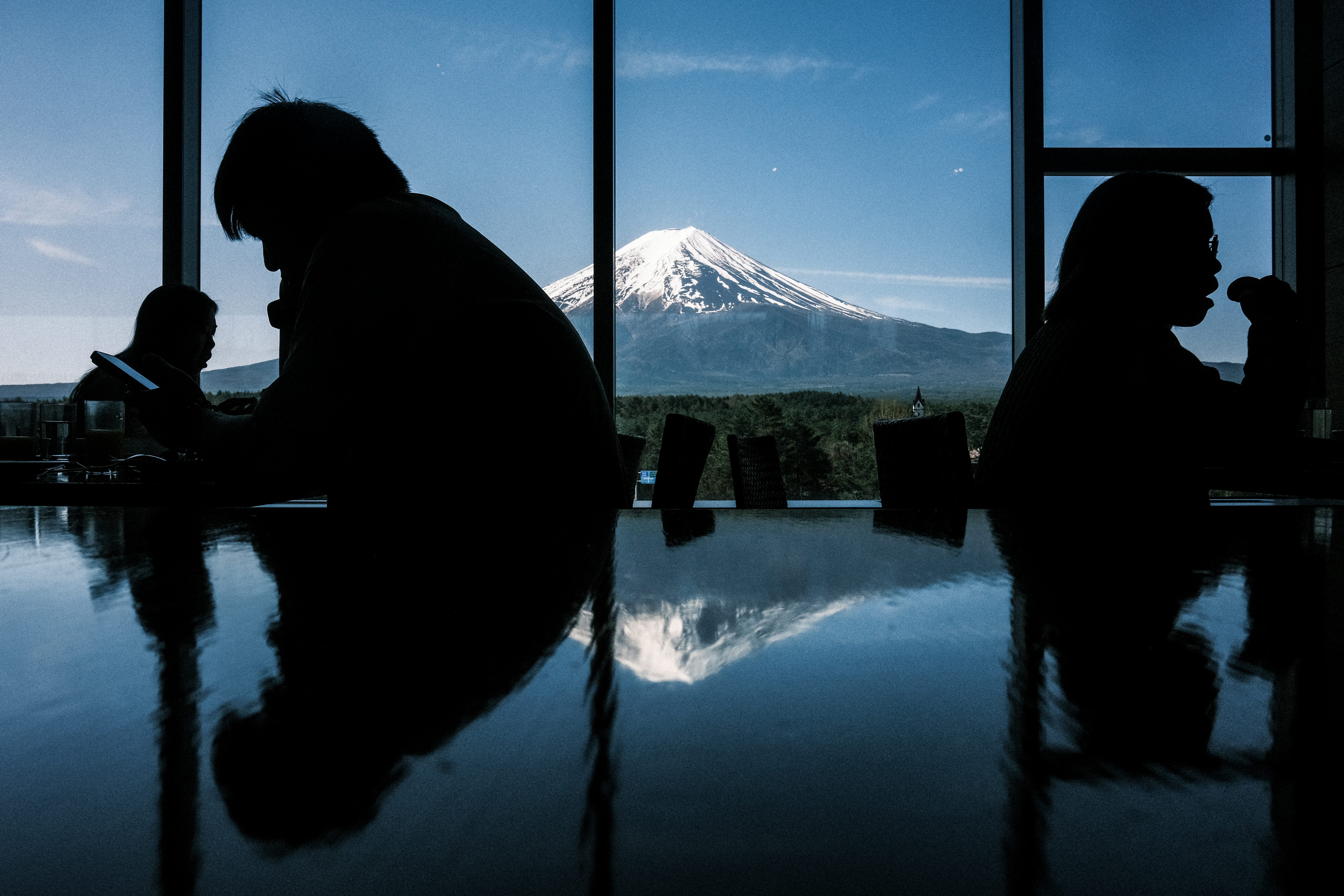
Highland resort and spa Mount Fuji Japan.
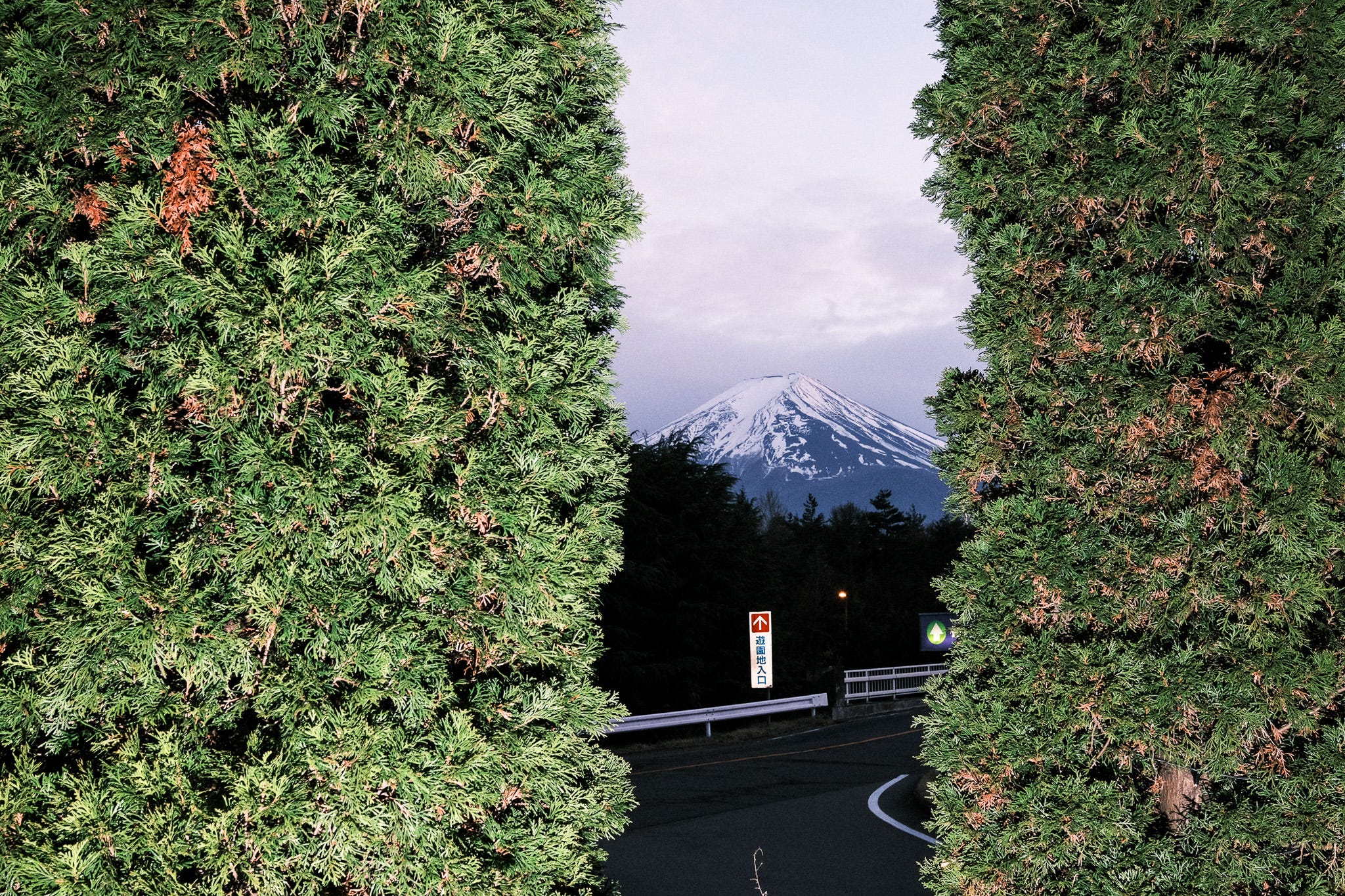
The view from the garden of the hotel using the Fuji camera and off camera flash.
The weather ultimately dictated my approach to each space that was presented to me.
I adapted to each challenge and produced a variety of work that kept me on my ninja toes at every step of the journey.
If you haven’t shot in Japan, I would say it is a must do. I hope this article has inspired you in some way and that you have many wonderful shooting experiences.
I feel blessed to have been a Street Ninja with a camera in Japan 2026 and can’t wait to go back.
Please leave comments and visit my sites. Until next time - Gavin Libotte.
Japan is very photogenic. Great images and thanks for the "Behind The Scenes" stories.
Your "Morizuki-esque" images are fantastic! True homages. I'm so glad you had an opportunity to experience Japan. Hope to chat in person soon!